10 Ways to Build Your Resilience as a Leader

Building your resilience as a leader
Building resilience has become a key theme amongst our clients
Leadership has always required a certain amount of tolerance for pressure. But the last few years have raised that bar pretty considerably: AI-driven transformation, flatter structures, ongoing economic uncertainty and teams that are more distributed, more vocal and more aware of their own wellbeing than any previous generation.
The pace of change is unnerving and leaders are being asked to hold strategic clarity, manage their team’s anxiety, adapt their own ways of working… and still deliver. That's a huge cognitive load for anyone, and unsurprisingly, is taking its toll on both individual and organisational resilience.
It’s important to remember that resilience isn't a personality trait, so it’s not something you either have or you don't. Instead, it’s a skill that you can learn and continue to build on.
Here are ten practical things you can do to build your own resilience.
01. Stop treating rest as a reward
Burnout doesn’t come from one difficult week, or being asked to stay late to get a project over the line. It comes from repeated exposure to doing “hard things” without the opportunity for rest. If you think about professional athletes, they don't train at maximum intensity every day; instead, they schedule recovery just as deliberately as they schedule hard sessions. Yet for some reason, we talk about how to foster a culture of high performance, and forget to build in opportunities to rest and recharge.
02. Know what actually recharges you
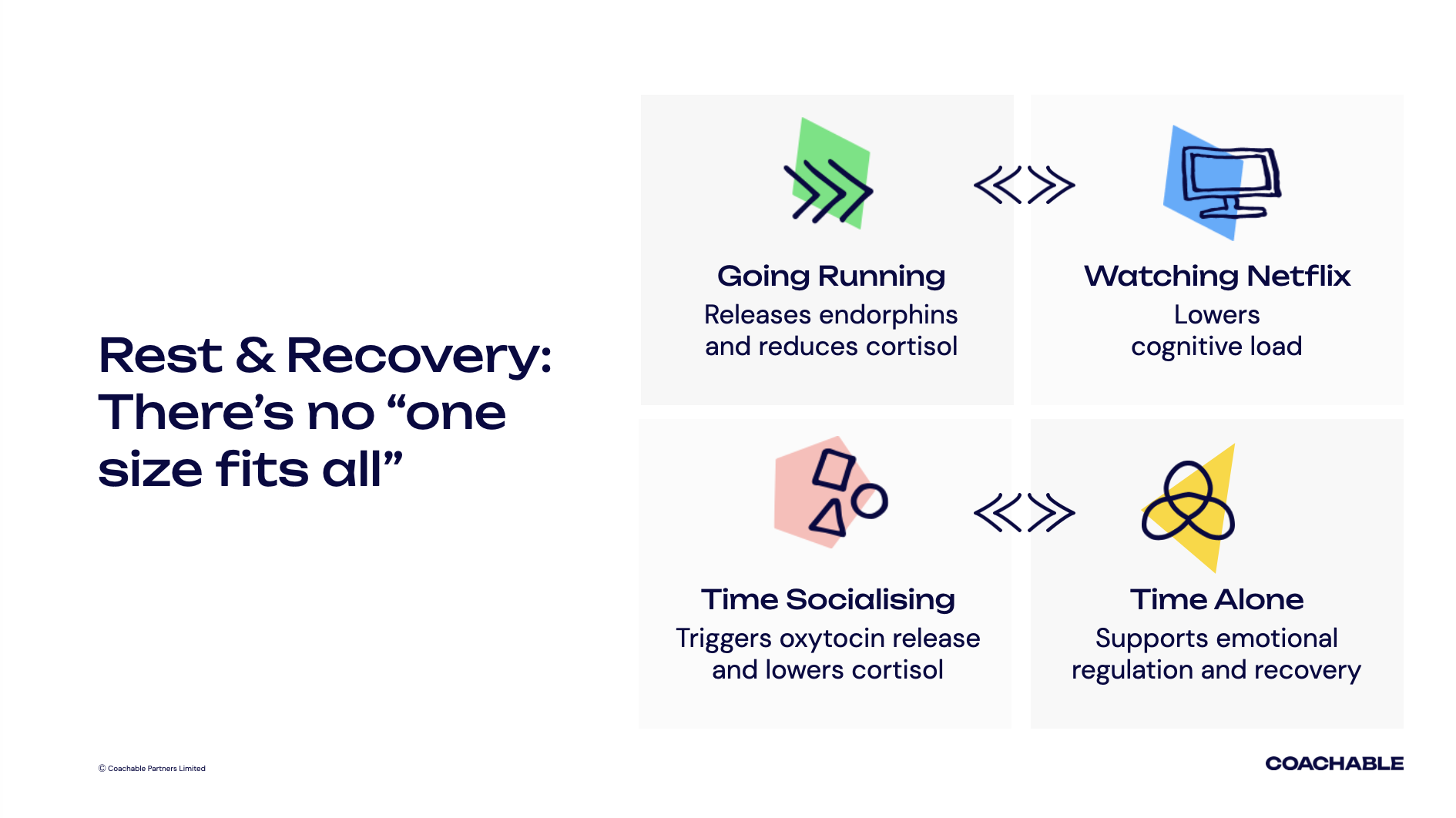
Recovery looks different for everyone whether that’s a run, binging a netflix series, a quiet weekend or a full social diary - none of these are wrong. What matters is that you know which ones work for you, and what behaviours you can actually commit to. Our resident neuroscientist, Soraya, has even given us the nod that dark chocolate and red wine (in moderation) are both beneficial for our brain health, so no judgement here.
03. Avoid working in the Zone of Delusion
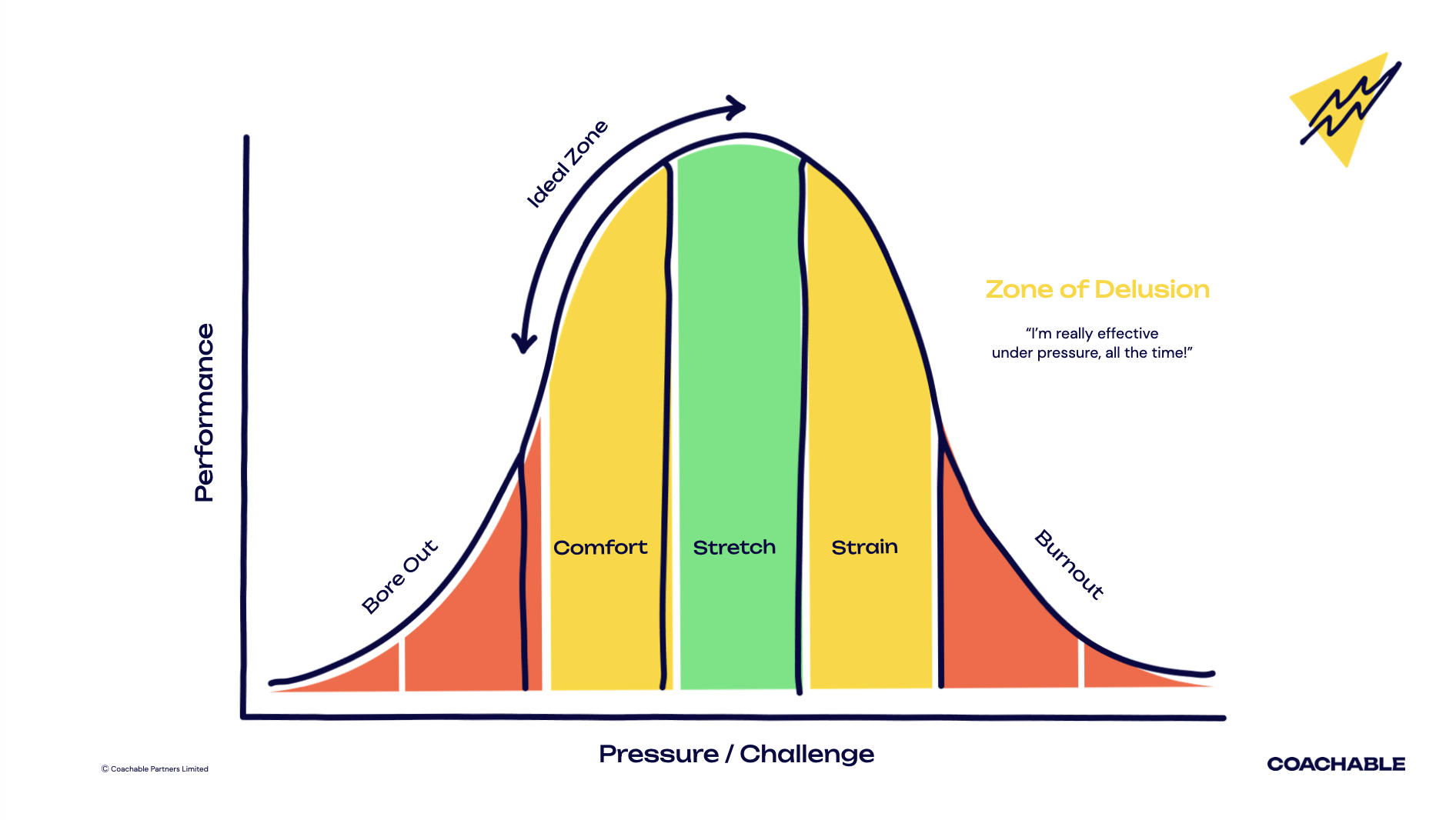
Pressure at work to perform does improve performance, but only to a point. Most good leaders know how to work in stretch; it’s that zone where you feel a little bit uncomfortable, you’re learning and there’s a few deadlines looming, but you feel in control and the pressure feels more like motivation. The problem comes when you’re operating in burnout and have convinced yourself you’re highly effective there. If you operate here regularly, you’re at risk of entering shitty boss territory, or what we call “The Zone of Delusion”. You can read more about this here.
04. Have confidence in your capability to work through change
Robertson Cooper’s framework identifies four key factors that influence resilience: Confidence, Purposefulness, Adaptability, and Social Support. When working with clients, confidence (or lack of it) is a continual theme. Having the confidence that you’ve already dealt with hard things in the past and that you’re great at what you do will help you to recall past successes when you feel uncertain or wobbly. Knowing and leaning on your strengths isn’t self-indulgent, it’s one of the most evidence-based things you can do to stabilise your resilience.
Here's a few tips on improving your confidence factor:
- Write down three successful tasks before leaving work to build a visual record of competence to counter self-doubt
- Notice thoughts like “I can’t do this.” Intentionally change them to “This is challenging, but I have handled tough tasks before”
05. Get clear on what you stand for
Another of Robertson Cooper’s factors is around having a clear sense of purpose that acts as an anchor when the environment feels unstable. If you're going through a period of change and everything around you feels uncertain, knowing what you value and why you're doing what you're doing gives you something to hold onto.
Here's a few tips on improving your purposefulness factor:
- Ask yourself how your daily tasks help the end customer or your team to help link your work to a bigger mission
- Break large, overwhelming targets into smaller, daily milestones to help maintain momentum.
- Define your “Why” with a one-sentence personal mission statement for your current role for you to re-read during high-pressure moments
06. Focus on what you CAN control
Here’s some free coaching for you: too many people spend too much of their time and energy worrying about things they have zero control over and this in itself can become a driver of lower resilience. Whilst you won't always be able to influence a situation, you can almost always influence how you respond to it. Spend your energy here.
07. Assume good intentions
When we’re stressed or under pressure, it's easy to catastrophise or read negative intent into decisions or other’s behaviour. We often use a coaching term “unconditional positive regard”, which is the assumption that people say or behave in a way with the right intentions, even if it doesn’t land that way. Adopting this mindset not only reduces the emotional load you're carrying but helps to keep your thinking clearer too.
08. Invest in your relationships
Resilience isn't a solo act! Just as you approach life challenges with your significant other, organisational challenges can be tackled with your peers. The leaders who cope best under pressure are typically the ones who have people they can be honest with and learn on for support. It goes without saying that building those connections before you need them is far more effective than trying to build them when you're already struggling.
09. Ask for feedback, and give more of it
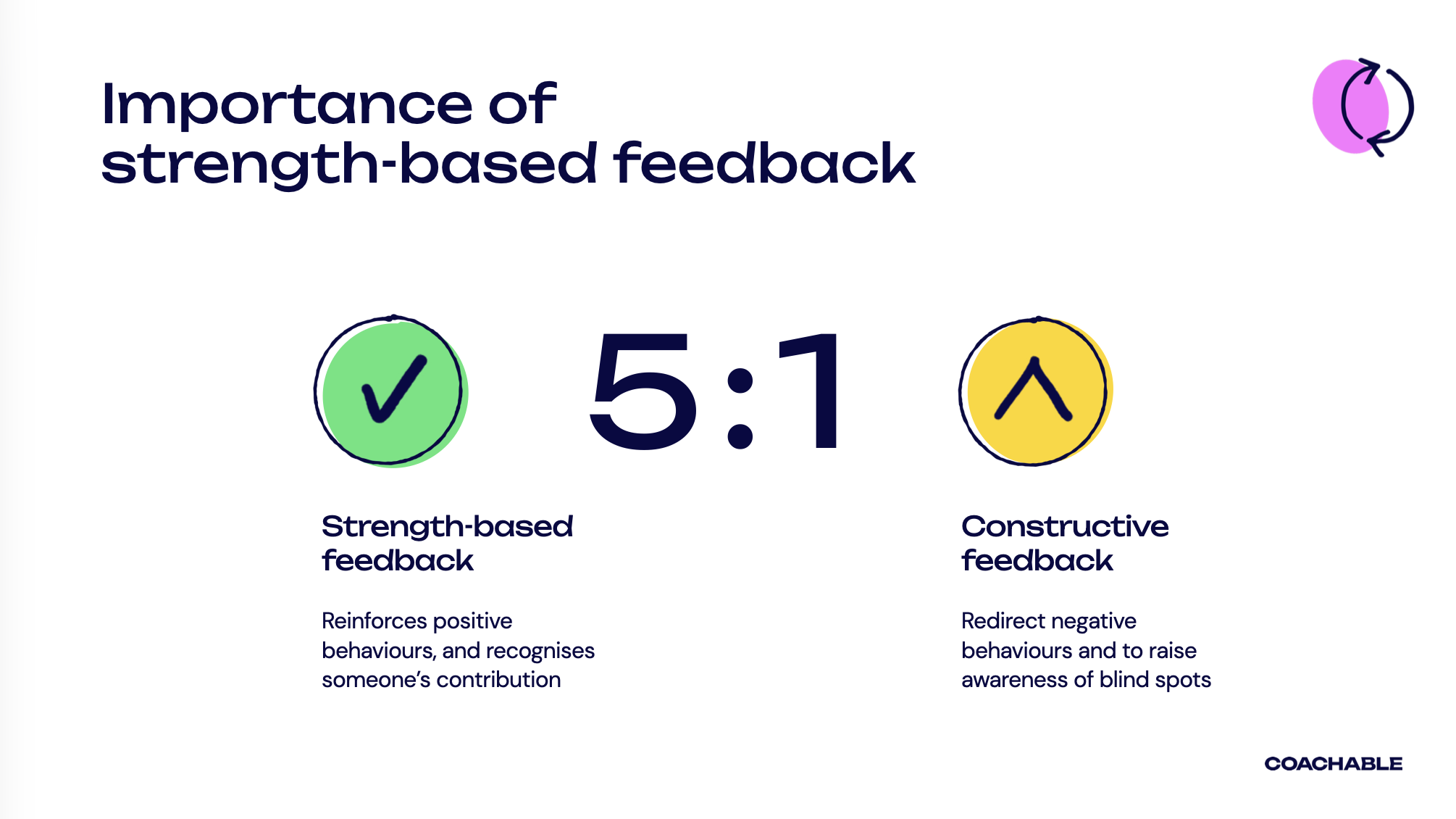
Giving and receiving specific, honest feedback builds confidence over time. It keeps you grounded in what's actually going well, rather than running on assumptions and self-criticism. It also models the kind of culture that makes teams more resilient. And if you can make that feedback strength-based, all the better. The golden rule is 5 pieces of strength-based feedback for each piece of constructive.
10. Put your own mask on first
Most leaders deprioritise their own wellbeing and needs for those of their team. However, if your own resilience is depleted, your ability to support, coach and stabilise the people around you is far less than if you were to have put your own mask on first. Managing your own resilience makes you a better leader; don’t forget that.
At Coachable, we work with leadership teams to build resilience as a practical, measurable capability. If you're thinking about how to equip your leaders for periods of sustained pressure or change, get in touch with us at hello@wearecoachable.com or book in a call here.