10 Ways to Support Your Team's Resilience
Supporting your team's resilience
Just as you’re responsible for your own resilience, your team is responsible for theirs. Whilst, as leaders, we often want to be able to protect our teams, if we absorb all of the responsibility for our team we unintentionally create dependency rather than capability. It’s also emotionally exhausting.
Your role is to facilitate the conditions and the conversations that make it possible for your team to take accountability for their resilience seriously. To check in with people before things tip into crisis. To ask the right questions. To make it safe to say "I'm not okay" without that becoming your problem to solve.
We often talk about “high support, high challenge” being a recipe for high performance; this is exactly what we mean when we think about empowering your team to own their own resilience.
Here are ten things leaders (or you!) can do to build resilience in their teams.
01. Recognise the early signs before they become a bigger problem
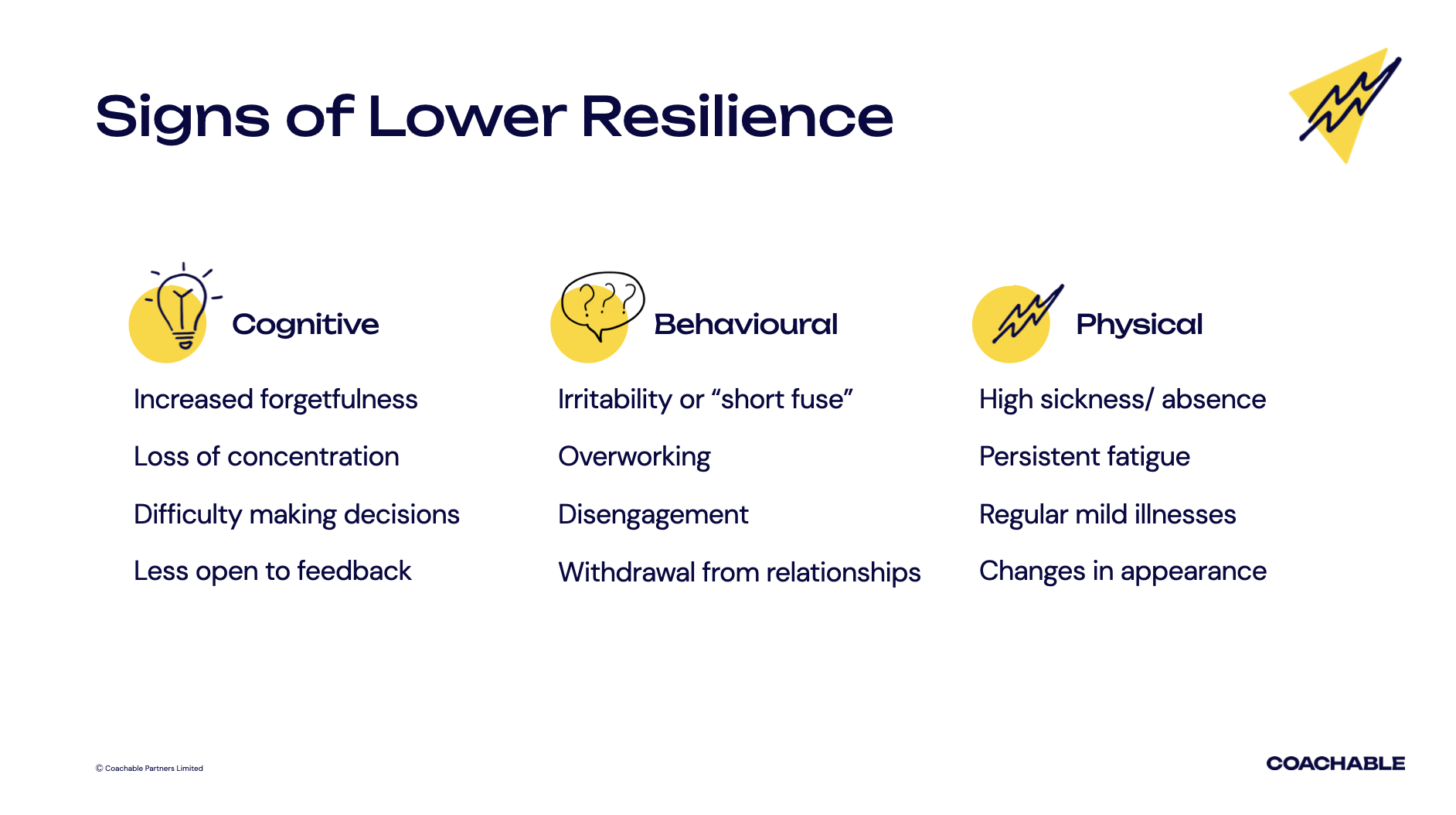
Low resilience tends to show up in three ways: cognitive (forgetfulness, difficulty making decisions, less open to feedback), behavioural (irritability, disengagement, withdrawal), and physical (persistent fatigue, higher absence, recurring minor illness). The cognitive and behavioural signs are the earlier warning signs, which are easy to miss if you're not looking.
The biggest thing you’re looking for is a change in how someone shows up.
02. Communicate clearly and often
Unclear expectations and poor communication are consistently among the top drivers of low resilience at work, according to the CIPD’s latest Health and Wellbeing Report. If your team doesn't know where they stand, what's changing, or what's expected of them, their cognitive load goes up and their sense of control goes down. It goes without saying that neither of those is good for resilience. How you communicate is a huge part of your role as a leader, so it’s important to prioritise getting it right, even if you’re feeling snowed under yourself.
03. Give people something they can control
Particularly during periods of change, the feeling of having no autonomy erodes our resilience and whilst you might not be able to give people control over the big decisions, you can give them control over how they do their work, how they manage their time and how they contribute to solutions. Wherever possible, look for ways to give your team greater autonomy.
04. Role model recovery time
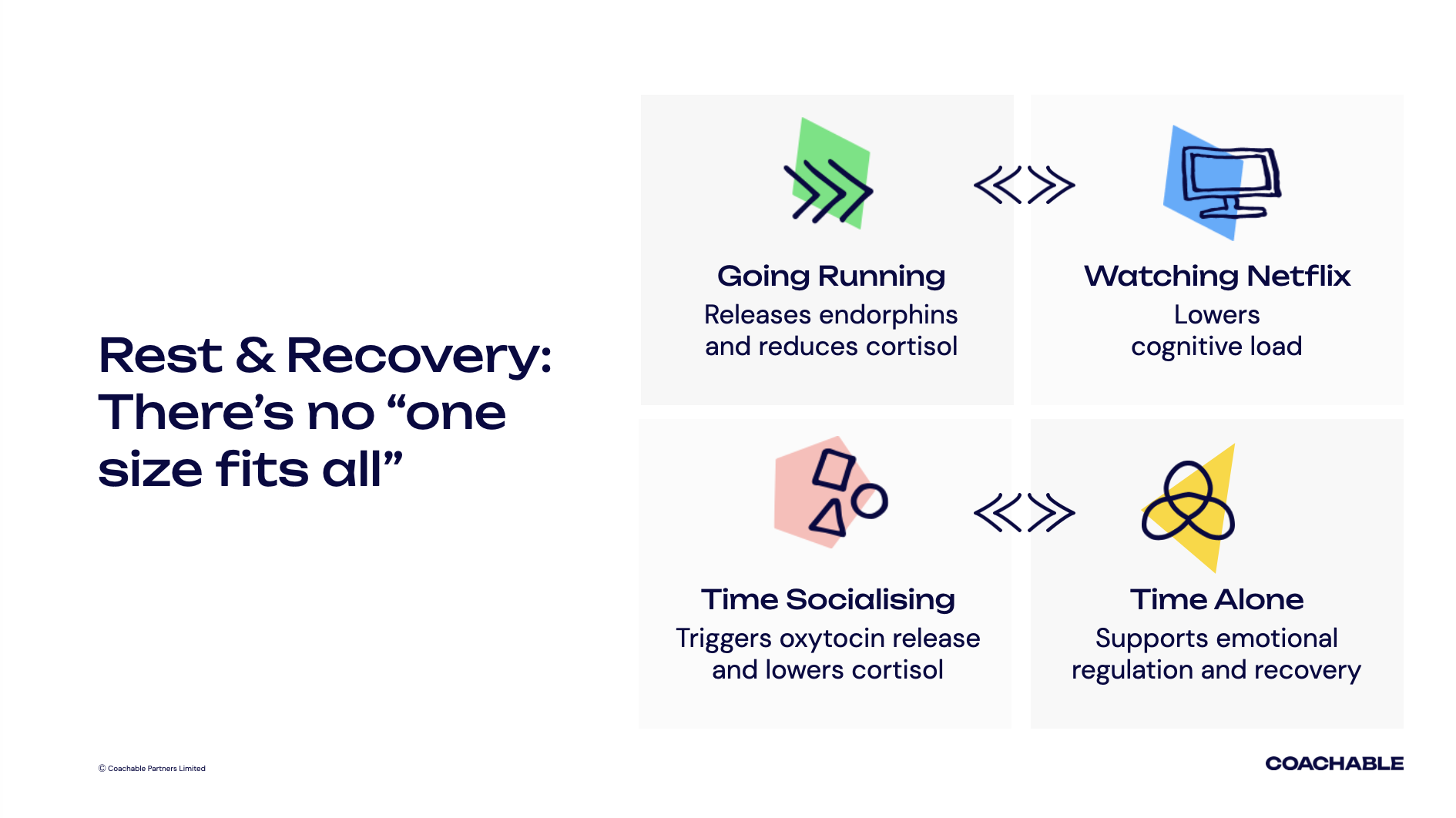
If there is never time to breathe your team will burn out so it’s important to help your team identify what rest and recovery looks like for them, as well as rolemodelling it yourself. If you're always on and always available, you're unintentionally sending a signal about what's expected, even if you tell them otherwise.
05. Ask before you assume
When someone seems to be struggling, the instinct is often try and fix it (or ignore it and hope it goes away). Neither is particularly useful. Your role is to facilitate the conversation around their wellbeing, so lead by asking open questions and hold back from jumping to solutions. What someone needs from you isn't always what you'd assume and asking "what would be most useful from me right now?" can be more helpful than any advice you could give.
06. Stay with the discomfort
This is harder than it sounds. When someone on your team is struggling, it can feel incredibly uncomfortable to sit with that rather than solve it. But your job isn't to make the feeling go away, so put away your superhero cape! Your role is to help them feel heard and to support them in working out what they can do. If you rush to solution mode, there’s a risk you’ll unintentionally signal that the person's feelings are a problem to be resolved, rather than a valid response to a difficult situation.
07. Help them see their own capability
A key part of building resilience in others is helping them reconnect with their own resources, whether that’s past experiences they've got through, strengths they're underusing or options they haven't considered. Questions like "when have you handled something like this before?" or "what would you do if you trusted yourself more here?" can help to build the person's confidence in their own judgement rather than creating dependency on yours.
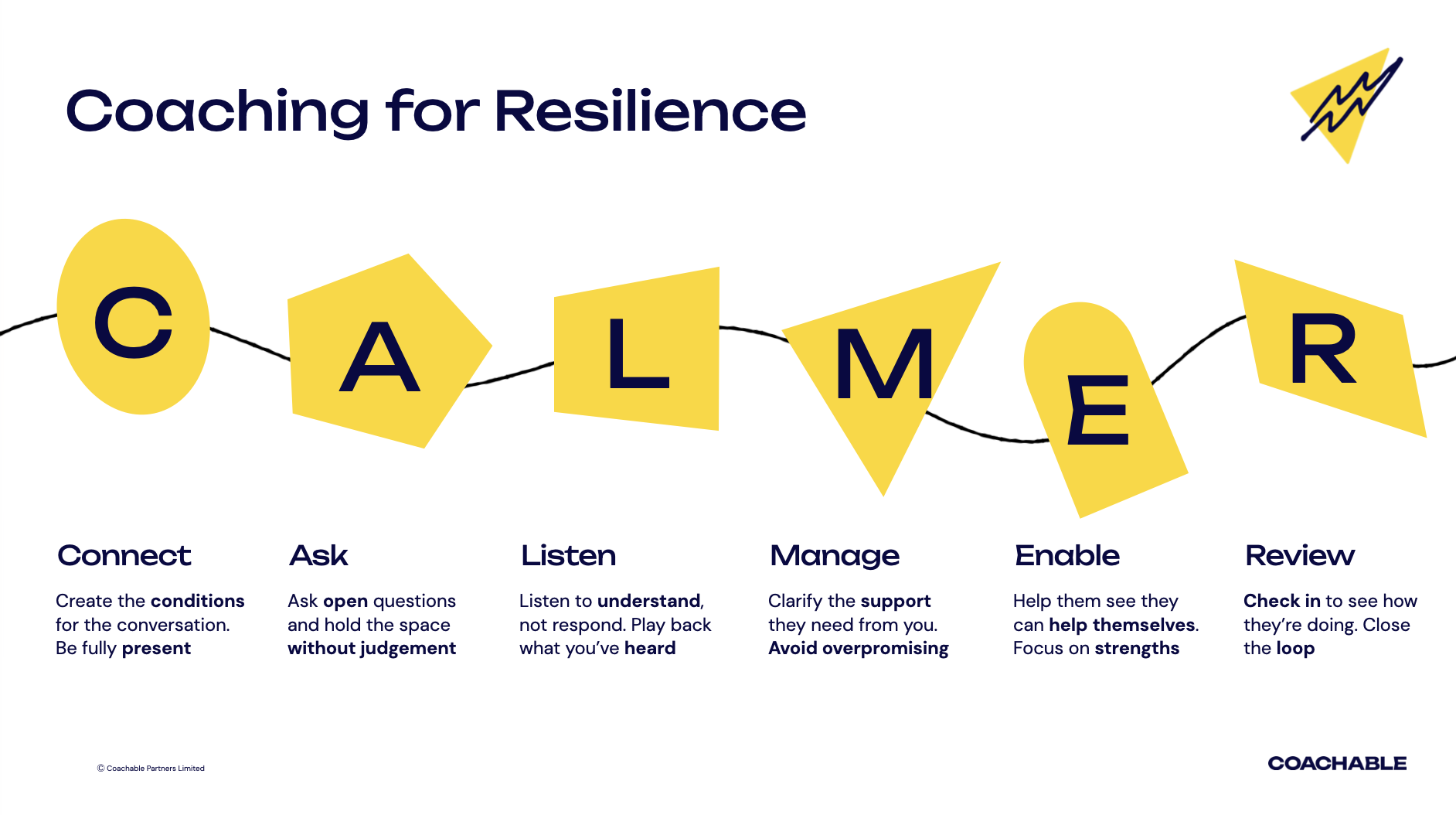
Read our blog on how to use the CALMER framework, which we adapted from The British Red Cross C.A.L.M.E.R framework to help you have better conversations around resilience with your team.
08. Only make promises you can keep
Overpromising and underdelivering is one of the fastest ways to damage trust (even when we do it to please or support). When someone comes to you and you're not sure what you can do, say so. Clarify what kind of support they're actually asking for before you commit to anything and a “I’m not sure, let me find out” is a very reasonable response (as long as you actually find out!)
09. Keep checking in
Having one tough conversation about someone’s resilience and not following up with them risks sending a message that you weren't that serious about it in the first place. If someone has shared something difficult with you, go back to them and see how they’re doing. It doesn't have to be a big conversation, but a quick "how are you doing this week?" signals that you still care. Checking in is also an opportunity to see how they’re getting on with their actions, and allows you to hold them accountable e.g. “you mentioned you were going to try getting a 15 minute walk in before our team meeting. How’s that going for you?”
10. Protect your own resilience
If you're visibly burnt out, never take a lunch break, respond to messages in the evenings and never admit that something is hard, you're sending clear messages about what’s expected, even if you tell them otherwise. If you want a resilient team, you have to be willing to demonstrate what that actually looks like. That means being honest about your own resilience, taking recovery seriously and talking about resilience as something that applies to everyone. If you need tips to build your own resilience you can have a nosey here.
At Coachable, we work with leadership teams to build resilience as a practical, measurable capability. If you're thinking about how to equip your leaders for periods of sustained pressure or change, reach out to us at hello@wearecoachable.com or book a call to see how we can help with our Resilience Masterclasses.