Coaching for Confidence | The SWAP Model

Coaching for Confidence
Most people are carrying a belief about themselves that isn't true.
"I'm not strategic enough for that room."
"I'm rubbish at presenting."
"If I push back, they'll think I'm difficult."
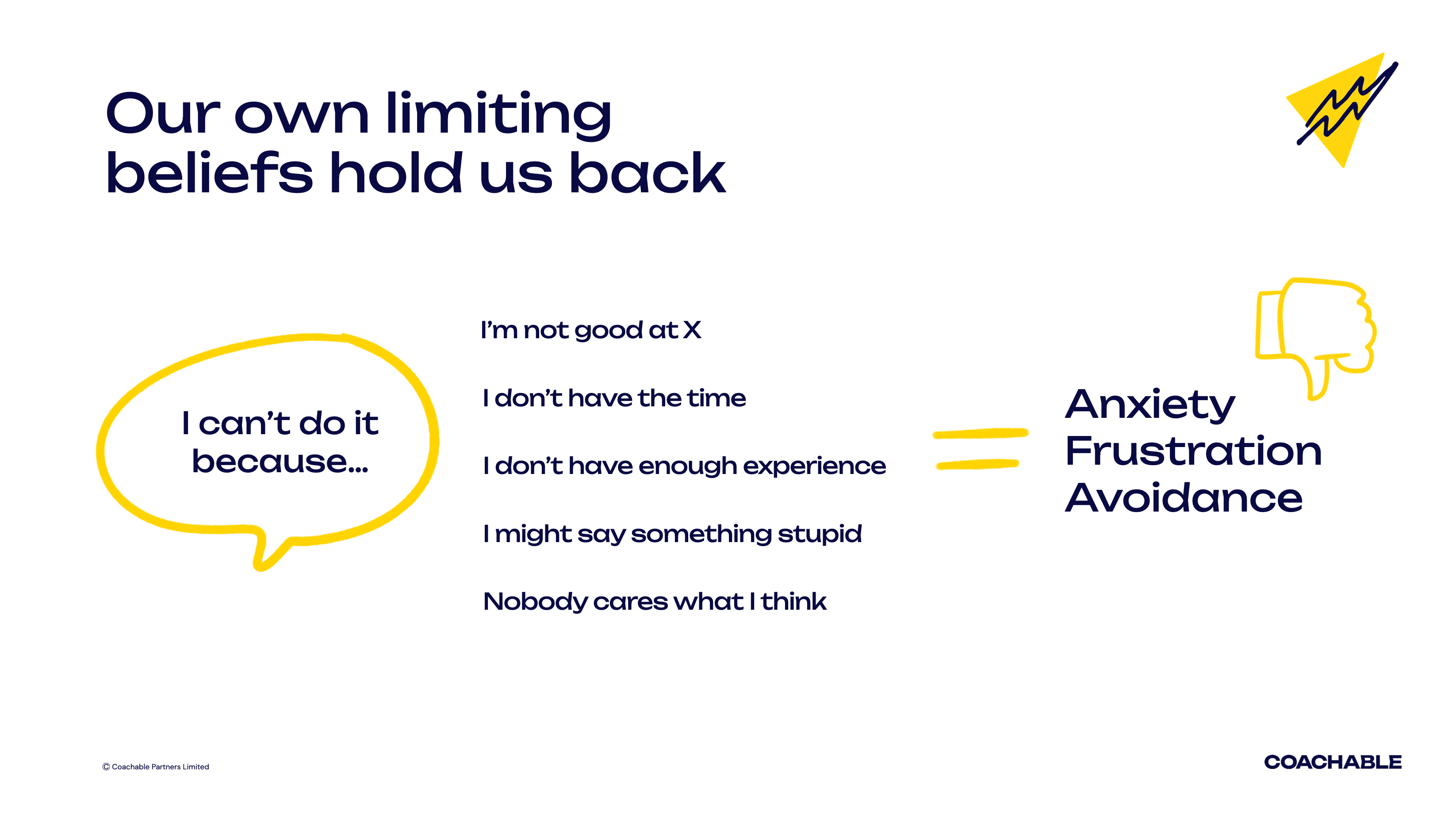
You’ve probably got some hiding in the depths of your subconscious too if you’re really honest with yourself. These are called Limiting Beliefs. They hold us back from reaching our full potential. Not applying for a promotion. Not taking the lead on a presentation even though we wrote the whole thing. Avoiding the difficult conversations that would improve the final outcome.
And it’s not just the individual that suffers in their own careers. Managers who aren’t tackling them in their 1-1s are letting expertise go to waste, or pushing the problem to an already stretched People team (yes, we know!), or to external coaches.
Let’s look at how your managers could take these types of conversations on themselves.
Don’t go for the confidence boost
When you hear a limiting belief, most people's first instinct is to offer reassurance. "Don't be silly, you're great". They say thanks, and nothing changes. Reassurance is a nice warm fuzzy moment for both of you, but it's not going to shift a belief in them that’s been decades in the making. What works better is helping them examine it themselves.
Now this is advanced coaching, so we advise you to use it with caution. Exploring someone's long held self beliefs takes a huge amount of trust, tact and intuition, don't try it with someone you barely know. You’re asking questions that they’ve never asked themselves as these beliefs are buried deep in their subconscious. Tread carefully and with curiosity.
Ally Jones, one of Coachable’s Co-Founders created the SWAP model back in 2024 to help managers understand the coaching approach to overcome limiting beliefs. Let’s look at it in more detail.
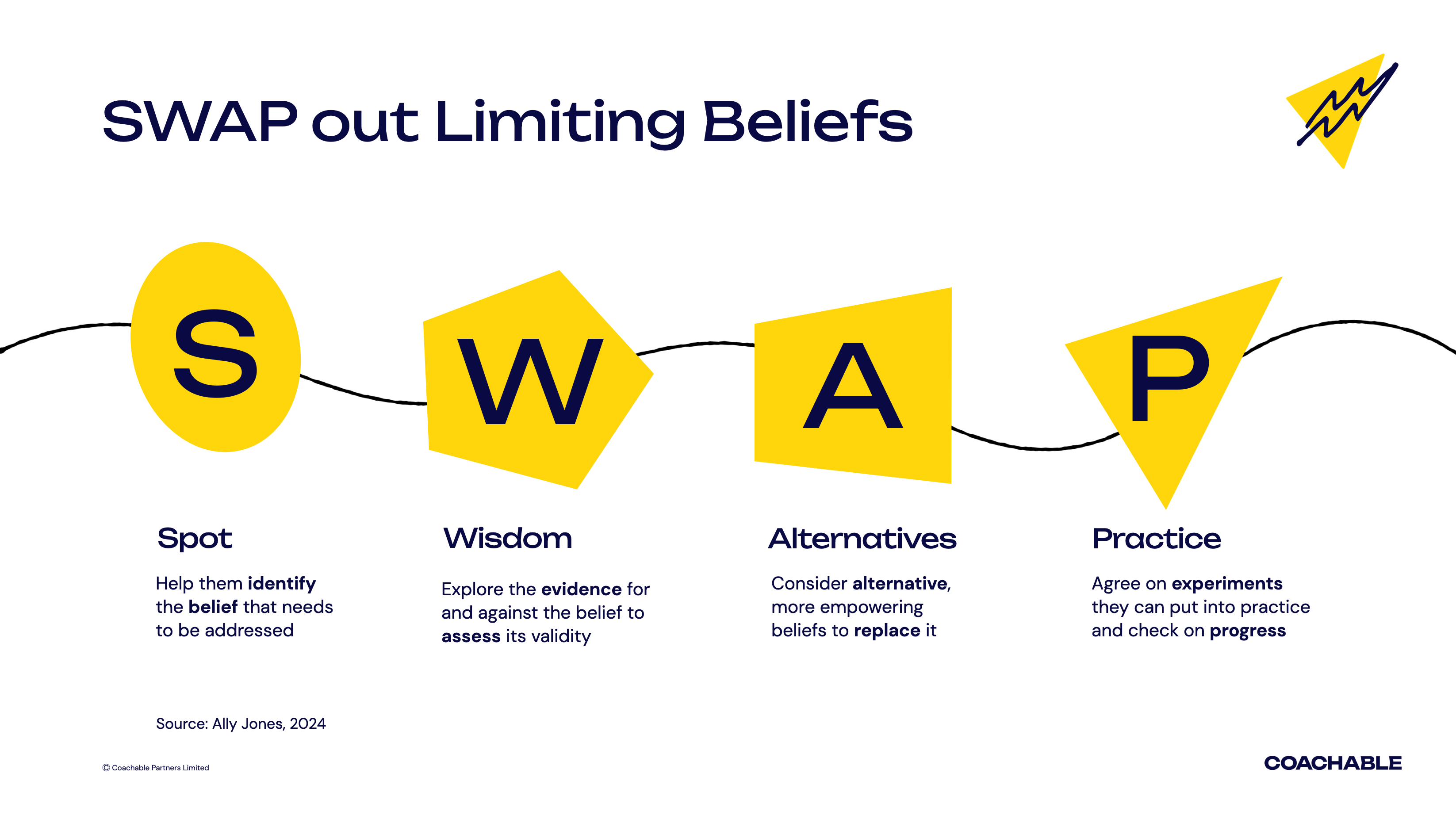
SPOT - Name it
When you hear a limiting belief, you’re probably going to think in your head “That’s not true, why would you think that about yourself!”. Which is exactly the conversation you need to have, but you need to subtly get them to think that using your Jedi coaching skills. It’s not enough that you think it or say it.
Try this instead: I'm noticing that you are saying [insert their belief]. I’m curious, what makes you think that’s true?
WISDOM - Test it
They will respond with a lot of “evidence” which they’ve spent years collecting in their own way that backs up that belief. Capture it all and play it back to them. This is your opportunity to test whether it’s still true or not.
"How true is this, actually?
“What evidence backs it up?”
“What evidence contradicts it?”
“What would you tell a friend who believed this about themselves?”
Most limiting beliefs are built on one bad experience, possibly early in a career or even at school, which then got generalised into a rule. It may have been true once, times have changed, but their brain is holding on to this belief to keep them safe.
Working with these types of assumptions is absolute gold in coaching conversations and are where you need to spend the majority of your time. Letting go of long held beliefs doesn’t happen in five minutes.
ALTERNATIVES - Replace it
Once they’ve identified that this belief isn’t serving them well, you can then move on to the next stage where you invite them to consider replacing it with a more useful belief. This has to be something they believe to be true, in their words (not yours). "I'm bad at presenting" might become "I'm better when I've had time to prepare properly." It’s honest, workable and gives them something actionable to do to improve their confidence.
PRACTICE - Embed it
A belief doesn't change just because someone agrees with a new statement about it in your one-to-one. Their brain is hardwired to keep going back to that belief. To break this, you need to change the way their brain is wired. Replace the negative thought with the positive one so the brain remembers the new thought not the old one.
It works through repetition and that new belief being front of mind. With my clients I ask them to write all of their new beliefs on Post-It Notes and put them on their desk to read them every day. A month later, they come back with different ways of thinking.
But it can also be an action they take. Speaking first in the next leadership meeting. Volunteering for the client update. Challenging an idea in a meeting. Find the action that will help them create a new truth for themselves. Then ask what support they need from you, and check in on it. As a manager, your role in keeping this front of mind is the most important part of rewiring their thinking, otherwise this becomes a cosy chat and nothing changes.
Putting it into practice
A few things worth knowing before you try it.
- This takes longer than a normal one-to-one, so don't wedge it into ten minutes at the end.
- Don't push if someone isn't ready to look at it. The trust isn’t there.
- Be prepared for the belief to have a real origin, which you shouldn’t dismiss.
Pick one person this week. Ask what's holding them back, and stay quiet long enough for an honest answer. You might be surprised by the power of that question.